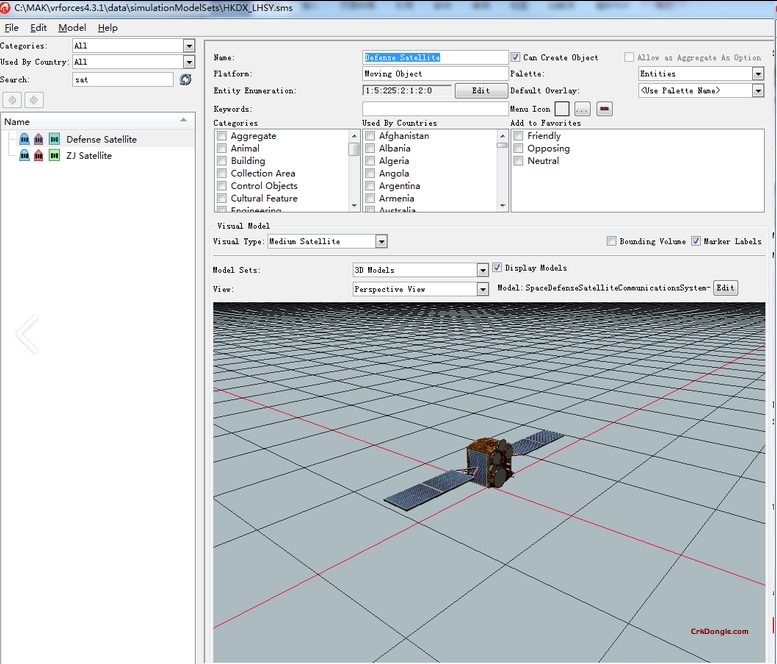
MAK VRForce 5.3 is a specialized, high-performance distributed simulation software developed by MAK Technologies, primarily used for Computer Generated Forces (CGF) and military simulations. Designed for defense analysts, military trainers, and simulation engineers, VRForce provides a robust platform for creating, managing, and analyzing complex multi-domain battle scenarios. The 5.3 release focuses on enhancing behavioral modeling, improving multi-threading performance, and expanding interoperability with other simulation standards, making it a critical tool for modern wargaming and mission rehearsal.
By leveraging a modular architecture and industry-standard networking protocols, MAK VRForce 5.3 enables users to simulate thousands of entities across air, land, sea, and space domains, providing a realistic and scalable environment for training and analysis.
Key Features
- Advanced Computer Generated Forces (CGF) – Provides a comprehensive suite of tools for creating intelligent synthetic entities. Users can define complex behaviors, sensor models, and weapon systems, allowing entities to react dynamically to changing battlefield conditions without constant human intervention.
- Multi-Domain Simulation – Supports the simulation of entities across all operational domains, including air, ground, maritime, and space. It features realistic physics models, terrain following, and localized weather effects to enhance the fidelity of the simulation environment.
- Robust Networking & Interoperability – Built on the MAK RTI (Runtime Infrastructure), VRForce ensures seamless interoperability with other simulation systems using standards like HLA (High-Level Architecture), DIS (Distributed Interactive Simulation), and TENA. This allows for large-scale, federated simulations involving multiple simulators and live assets.
- Multithreaded Architecture – Features a highly optimized, multithreaded simulation engine that leverages multi-core processors to handle large entity counts and complex calculations efficiently. This ensures smooth performance even in massive-scale scenarios with thousands of interacting units.
- Flexible Scenario Development – Offers a powerful graphical user interface (GUI) for scenario editing, allowing users to easily place entities, define routes, and create complex mission plans using a “sync matrix” for coordinated actions. It also supports extensive API customization for developers.
- Realistic Sensor & Weapon Modeling – Includes detailed models for sensors (radar, EO/IR, acoustic) and weapons, accounting for factors like line-of-sight, environmental attenuation, and jamming. This provides accurate representations of detection probabilities and engagement outcomes.