VectorCAST 2025 SP5: The Definitive Test Automation Platform for Safety-Critical Software
VectorCAST 2025 SP5 is the industry-leading, integrated test automation platform dedicated to verifying and validating embedded software written in C and C++. Engineered specifically for the rigorous demands of safety-critical industries, it automates the complex and time-consuming processes of unit, integration, and system-level testing. This release, Service Pack 5, represents a mature and enhanced version, delivering the stability and advanced features required to achieve and demonstrate compliance with international safety standards such as DO-178C (avionics), ISO 26262 (automotive), and IEC 62304 (medical devices).
Core Philosophy: Automating the Testing Lifecycle
VectorCAST’s power lies in its ability to automate the entire testing workflow—from creating test harnesses and generating test cases to executing tests on native or simulated hardware and producing comprehensive, audit-ready documentation. This end-to-end automation drastically reduces manual effort, minimizes human error, and provides objective, reproducible evidence of code quality and requirements coverage.
Key Components & Capabilities:
1. Automated Unit & Integration Testing
-
Test Harness Generation: Automatically builds complete, isolated test environments (harnesses) for individual modules (units) or groups of modules, handling complex dependencies, stubs, and mocks.
-
Comprehensive Code Coverage Analysis: Measures and reports on critical structural coverage metrics mandated by safety standards, including Statement Coverage, Branch/Decision Coverage, and MC/DC (Modified Condition/Decision Coverage).
-
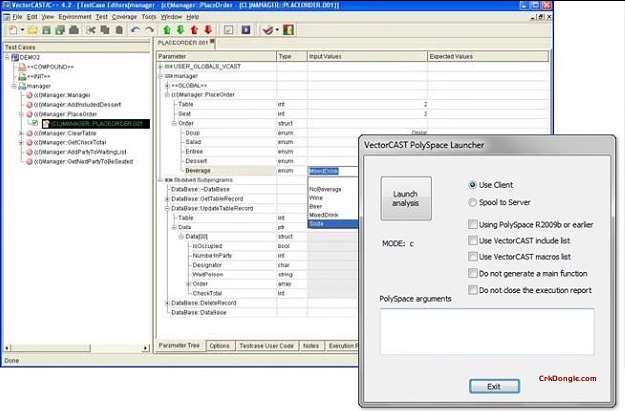
Test Case Management & Execution: Provides a central interface to create, manage, and execute large suites of test cases, with support for both manually crafted tests and automatically generated ones based on requirements.
2. Advanced System-Level & Runtime Testing
-
VectorCAST/RSP: A unique component for executing test cases directly on the target embedded hardware or instruction-set simulators. This validates not only functional logic but also compiler behavior, stack usage, and the interaction with the real-time operating system (RTOS).
-
System-Level Interface Testing: Enables testing of software components within the broader integrated system context, verifying interfaces and interaction patterns.
3. Requirements Traceability & Compliance Reporting
-
Seamless Requirements Linking: Integrates with leading ALM/requirements tools (like IBM DOORS, Siemens Polarion) to link test cases directly to functional requirements, enabling bi-directional traceability.
-
Audit-Ready Certification Kits: Generates comprehensive documentation and reports (test plans, procedures, results, coverage analysis) in formats tailored to meet the evidentiary needs of certification authorities (FAA, EASA, etc.).
4. Support for Modern Development Workflows
-
CI/CD Pipeline Integration: Fully supports integration into modern Continuous Integration/Continuous Deployment (CI/CD) pipelines (e.g., Jenkins, Azure DevOps), enabling automated regression testing with every code change.
-
Multi-Compiler & Platform Support: Works with a vast array of compilers (GCC, Clang, Wind River, Green Hills, IAR, etc.) and development environments, ensuring compatibility with existing toolchains.