1️⃣MSOSA: Magic Systems of Systems Architect 2026x Refresh1
2️⃣MCSE: Magic Cyber Systems Engineer 2026x Refresh1
3️⃣MSA: Magic Software Architect 2026x Refresh1
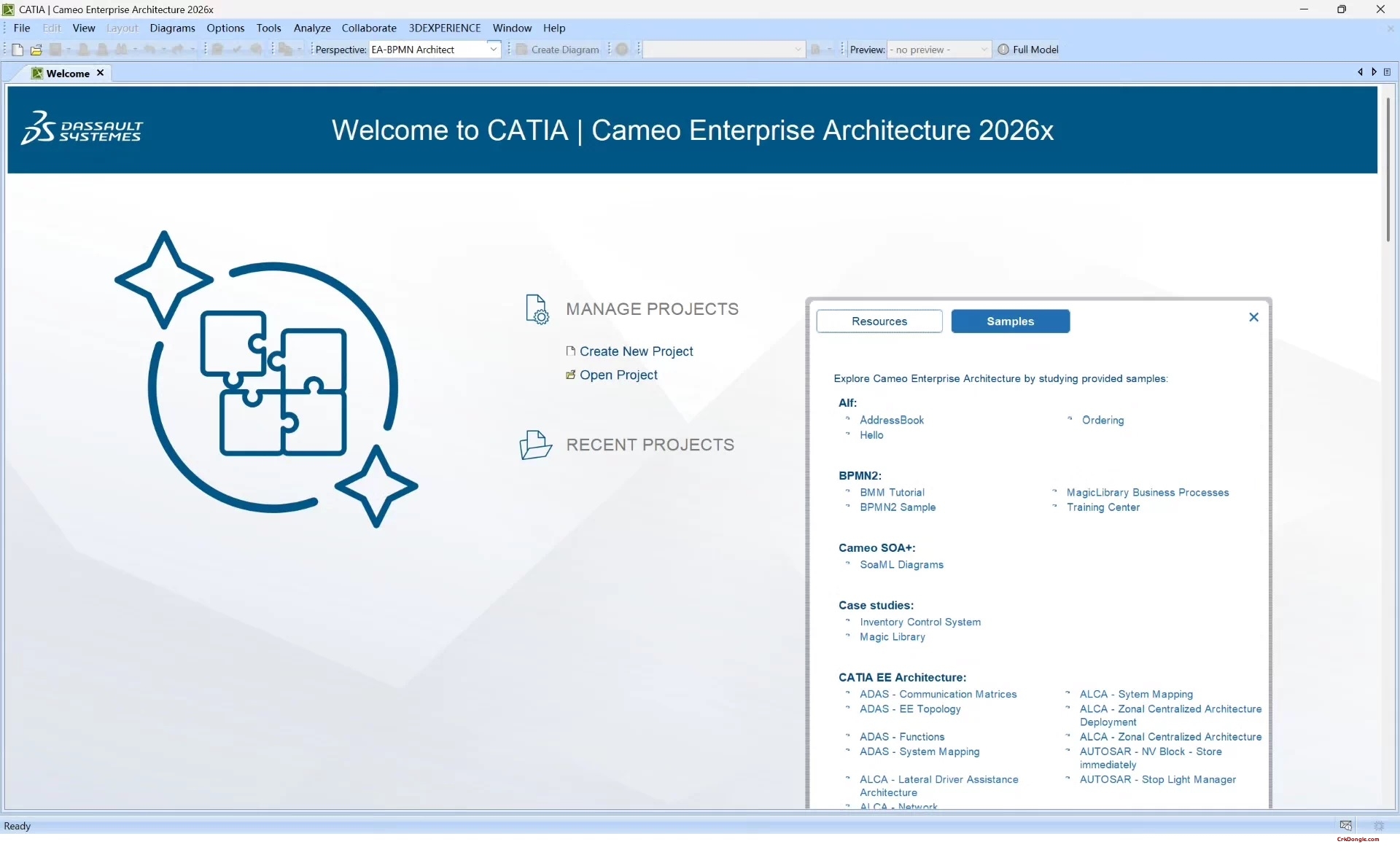
4️⃣CEA: Cameo Enterprise Architecture 2026x Refresh1
5️⃣CEA: Cameo Systems Modeler 2026x Refresh1
6️⃣MD: MagicDraw 2026x Refresh1
MagicDraw 2026x is a premier, standards-based visual modeling and design tool used by systems engineers, software architects, and business analysts to specify, design, and analyze complex systems. It provides comprehensive support for leading modeling languages—including UML (Unified Modeling Language), SysML (Systems Modeling Language), and BPMN (Business Process Model and Notation)—within a single, collaborative environment. This enables the creation of a “single source of truth” model that bridges the gap between stakeholder requirements, system architecture, and software design.
Core Function: Creating Executable Specifications with Visual Models
MagicDraw’s strength lies in using standardized diagrams (like Use Case, Activity, Block Definition, Internal Block diagrams) to create precise, unambiguous, and often executable models of systems. These models facilitate communication, reveal design flaws early, and can be used for simulation and automated code generation.
Key Modeling Frameworks & Applications:
1. Model-Based Systems Engineering (MBSE) with SysML
-
Full SysML 1.6 Support: Implements all nine SysML diagram types to model system requirements, structure, behavior, and parametrics for complex physical and cyber-physical systems.
-
Requirements Traceability: Links system requirements directly to design elements, test cases, and other artifacts, ensuring the design fulfills specified needs and enabling impact analysis.
2. Software & Application Design with UML
-
Comprehensive UML 2.5 Support: Supports all 14 UML diagram types for detailed object-oriented software design, including Class, Sequence, State Machine, and Component diagrams.
-
Code Engineering: Features round-trip engineering with multiple programming languages (Java, C++, C#), allowing synchronization between the model and source code.
3. Enterprise Architecture & Business Process Modeling
-
Framework Support: Includes built-in support for industry frameworks like UAF (Unified Architecture Framework), DoDAF (Department of Defense Architecture Framework), and TOGAF.
-
BPMN 2.0 Modeling: Allows for the visualization and analysis of business processes to improve operational efficiency.
4. Collaboration & Teamwork
-
Centralized Model Repository: Supports team-based modeling with version control integration (like SVN, Git) and role-based access control.
-
Publishing & Documentation: Automatically generates detailed documentation (HTML, PDF, RTF) and web-based views of the model for stakeholder review.